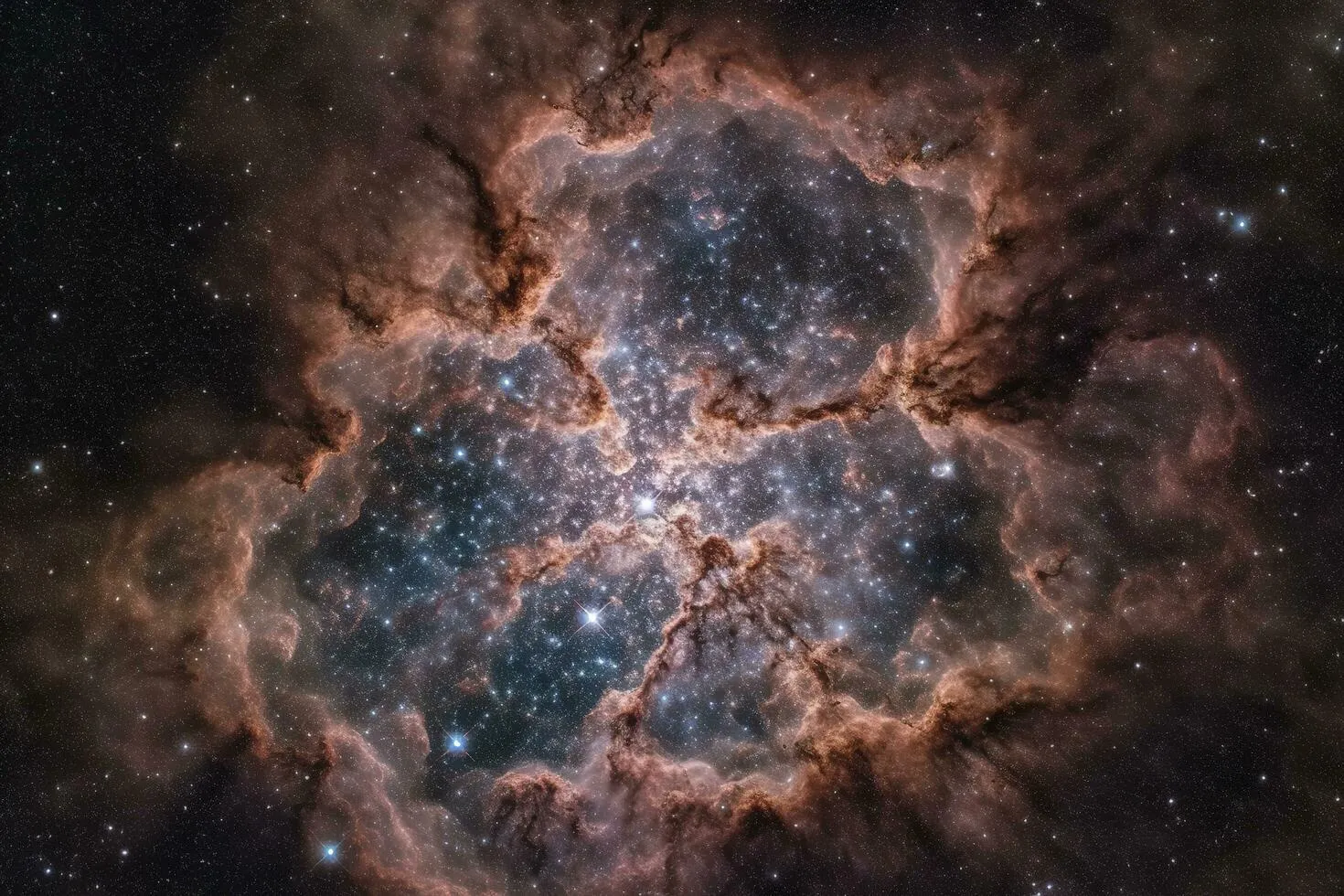
What is the Tarantula Galaxy
The Tarantula Galaxy, also known as 30 Doradus, is an incredibly active star-forming region located in the Large Magellanic Cloud (LMC), a satellite galaxy of the Milky Way. It is one of the most luminous and massive star-forming regions known in the Local Group of galaxies. Its significance lies not only in its sheer size and brightness, but also in the wealth of information it provides about star formation processes, the evolution of massive stars, and the interstellar medium. The Tarantula Galaxy’s dynamic nature makes it a valuable subject of study for astronomers worldwide, constantly revealing new insights into the universe’s most energetic phenomena. The Tarantula Galaxy is a treasure trove for understanding how stars are born and how galaxies evolve.
The Tarantula Galaxy’s Location
To find the Tarantula Galaxy, you must first locate the Large Magellanic Cloud (LMC). The LMC is visible from the Southern Hemisphere and can be spotted with the naked eye as a hazy patch in the night sky. It is situated in the constellation Dorado, near the constellation Mensa. The Tarantula Galaxy itself is a prominent feature within the LMC, appearing as a bright, irregularly shaped nebula. Even under dark skies, it is a relatively easy target for amateur astronomers with the right equipment. Its location makes it accessible for observation throughout the year for those in the Southern Hemisphere, providing ample opportunity to study its complex structures and active star formation.
Finding the Tarantula Galaxy in the Night Sky

Finding the Tarantula Galaxy requires knowing the right constellations and using star charts or astronomy apps. Start by familiarizing yourself with the constellations Dorado and Mensa. Star charts are invaluable tools to help pinpoint the LMC and, within it, the Tarantula Galaxy. Astronomy apps, available on smartphones and tablets, can use your device’s location to guide you directly to the Tarantula Galaxy’s position in the sky. Look for a bright, nebulous patch – this is the Tarantula Nebula. Observing the Tarantula Galaxy requires a dark, clear night, away from light pollution, to fully appreciate its splendor. Plan your observation session with a check of the weather forecast and plan to be patient, as it may take some time for your eyes to adjust to the darkness.
Best Time to See the Tarantula Galaxy
The best time to observe the Tarantula Galaxy is during the Southern Hemisphere’s winter months, from late autumn to early spring. During these months, the LMC, and therefore the Tarantula Galaxy, is high in the night sky for longer periods, maximizing viewing time. Check the local astronomical twilight times to determine when the sky is darkest. Avoid nights with a full moon, as moonlight can significantly diminish the visibility of the nebula. The exact timing will depend on your specific location within the Southern Hemisphere, but generally, the optimal viewing occurs from around midnight to early morning. Check for any light pollution and obstructions, such as trees or buildings, that may interfere with your view.
Equipment Needed to Observe the Tarantula Galaxy
Observing the Tarantula Galaxy can be done with a range of equipment, from the very simple to the more sophisticated. The most basic is a pair of binoculars. Binoculars can reveal the nebula’s overall shape and some of its brighter features. A telescope offers a much more detailed view, allowing you to see the intricate structures within the nebula, like the bright star clusters and dark dust lanes. A telescope with a large aperture (the diameter of the lens or mirror) is preferable, as it gathers more light, revealing fainter details. A sturdy tripod is essential for both binoculars and telescopes to keep the image steady. Consider also having a red light flashlight for preserving your night vision, comfortable seating and warm clothing.
Telescopes vs. Binoculars for Observing

Binoculars offer a wide-field view, making it easier to locate the LMC and appreciate the Tarantula Galaxy’s overall context within the cloud. They are also more portable and user-friendly for beginners. Telescopes, on the other hand, provide a more detailed and magnified view. With a telescope, you can resolve individual stars within the nebula and observe the finer structures of gas and dust. The choice depends on your experience and preferences. For a first-time view, binoculars are great. If you want to dive deeper, a telescope is the better option. If your budget allows it, consider a telescope with a GoTo feature that automatically points to celestial objects, simplifying the finding process, which is particularly useful in locating the Tarantula Galaxy.
Tips for Observing the Tarantula Galaxy
To maximize your viewing experience, dark adaptation is critical. Give your eyes at least 20-30 minutes to adjust to the darkness before looking through your binoculars or telescope. Choose a location with minimal light pollution; the darker the skies, the better the view. Use a red light flashlight to preserve your night vision while navigating. Patience is also essential; it may take some time to locate the Tarantula Galaxy and discern its features. Start with low magnification eyepieces to get a broad view, then increase magnification as needed. Take notes or make sketches to document your observations. Finally, check the weather forecast before planning your observation session, as clear skies are paramount to successful viewing.
Understanding the Tarantula Galaxy
The Tarantula Galaxy is a complex and dynamic region, filled with ionized gas, young stars, and dark dust clouds. The heart of the nebula is powered by a massive star cluster called R136. The R136 cluster contains some of the most massive and luminous stars known, which emit intense radiation, ionizing the surrounding gas and creating the bright nebula we observe. The intense radiation and stellar winds from these massive stars sculpt the surrounding gas and dust, creating intricate structures such as filaments, bubbles, and cavities. Understanding the Tarantula Galaxy requires understanding the interplay of stellar evolution, the interstellar medium, and the processes of star formation and destruction.
What Makes the Tarantula Galaxy Unique

What makes the Tarantula Galaxy truly unique is its enormous size, its incredibly high star formation rate, and the presence of R136, one of the most massive star clusters in the Local Group. It hosts numerous massive stars, some of which are among the most luminous and hottest known. Its proximity to Earth allows astronomers to study star formation processes in detail, providing critical insights into how stars are born in extreme environments. The galaxy’s size and brightness also make it an ideal laboratory for studying the effects of massive stars on their surroundings. It is one of the most actively studied star-forming regions, continuously revealing new discoveries about the universe. Its richness and complexity make it a vital target for researchers.
Star Formation in the Tarantula Galaxy
The Tarantula Galaxy is a prolific site of star formation. Within the nebula, vast clouds of gas and dust collapse under gravity, giving birth to new stars. The process is triggered by the intense radiation and stellar winds from massive stars in R136, which compress the surrounding gas and dust, creating regions of high density where stars can form. The Tarantula Galaxy is so active that many stars are in the process of formation simultaneously. The young stars emit ultraviolet radiation, which heats the surrounding gas, causing it to glow. This process is a crucial step in understanding how galaxies build and evolve. Its detailed observation provides information on the life cycle of stars and the forces that shape galaxies.
Nebulae and Dust Clouds
The Tarantula Galaxy is filled with nebulae and dark dust clouds. Nebulae are vast clouds of ionized gas, primarily hydrogen, that emit light at various wavelengths. The red glow of the Tarantula Nebula is due to the emission of hydrogen-alpha light, which is produced when hydrogen atoms are ionized by the intense radiation from young, hot stars. Dark dust clouds, composed of tiny particles of dust and gas, obscure the light from behind. They can be seen as dark, irregular patches within the nebula. The interaction of nebulae and dust clouds with stellar winds and radiation from massive stars creates the complex and beautiful structures we observe. Studying these structures helps astronomers understand the dynamics of the interstellar medium and star formation processes.
The Tarantula Galaxy’s Supernova

The Tarantula Galaxy is also home to one of the most famous supernovae, SN 1987A. This supernova occurred in 1987 and was the closest supernova visible to the naked eye since the invention of the telescope. SN 1987A provided astronomers with unprecedented insights into the death of a massive star and the processes that lead to supernova explosions. The study of SN 1987A has significantly advanced our understanding of stellar evolution, supernova remnants, and the formation of neutron stars. The afterglow from this supernova continues to be studied, providing long-term data about the aftermath of a stellar explosion and contributing to a more holistic picture of the Tarantula Galaxy.
Importance of the Tarantula Galaxy to Astronomy
The Tarantula Galaxy is of immense importance to astronomy. As a prime site for star formation, it allows astronomers to study the birth of stars in detail, including the formation of massive stars, which are difficult to observe in our own galaxy. It offers a close-up view of stellar evolution and the interplay between stars and the interstellar medium. The unique characteristics of the Tarantula Galaxy make it an ideal test bed for understanding the processes that shape galaxies, including star formation, feedback from massive stars, and the distribution of gas and dust. Studying the Tarantula Galaxy helps improve the comprehension of how galaxies evolve over cosmic time and gives clues about the universe.
Future Research on the Tarantula Galaxy
Future research on the Tarantula Galaxy will explore numerous areas. Astronomers will continue to investigate the details of star formation processes, using advanced telescopes such as the James Webb Space Telescope, which can penetrate the dust clouds and provide unprecedented views of the young stars and their formation environments. They will also study the evolution of massive stars, analyzing their properties, behavior, and impact on the surrounding gas and dust. Furthermore, researchers will study the supernova remnants, like SN 1987A, to learn more about the aftereffects of supernova explosions, and the formation of neutron stars or black holes. These investigations promise to reveal more on the secrets of the Tarantula Galaxy.